
₹2470
₹3131
(21% Off)
Inclusive of all taxes
Qty
Buying in bulk?

In Stock

Guaranteed Service

Free Home Delivery
above ₹199
Check Delivery
Enter pincode for exact delivery dates / charges and to know if express delivery is available
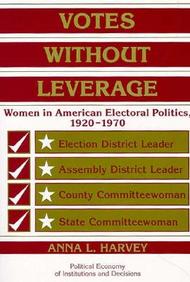
Votes Without Leverage - Women In American Electoral Politics, 1
Cambridge University Press (Publisher)
Product Specifications
Book Description
Using recent theoretical developments in the political economy of institutions
and electoral behavior, this book attempts to solve an enduring puzzle in
women's electoral politics, namely why the increasing importance of women's
votes in the 1920s did not imply increasing success for the lobbying efforts of
women's organizations. The book argues that women's exclusion from the suffrage
created terms that led to distinctive patterns of post-suffrage female electoral
politics. These electoral dynamics in turn are responsible for the decline in
the political influence of women's organizations by the mid-1920s.
This book explores why the increasing importance of women's votes in the 1920s
did NOT lead to increasing success
Book Specifications
ISBN-13 9780521597432
Language English
Binding Paper Back
Publisher Cambridge University Press
Publishing Date 1998-08-27
Total Pages 268