
MRP: ₹5176
₹4262
₹ 914 Off
(Incl. of all taxes)
In stock
Deliver to
Enter your pincode to see dispatch dates
Free delivery above ₹199
Qty
- Secure payment
- International shipping
- Carefully packed
Book Summary
In this book, 16 leading economists establish the connection between the forces
of the labour market and the persistent but ever-changing problem of
unemployment. These scholars examine structural unemployment in terms of
efficiency wage and dual labour market models, as well as neo-classical theory.
The effects of the decline of the manufacturing sector, the rise in services,
and the upheaval in the oil industry on our understanding of cyclical and
frictional unemployment are incorporated into the analysis. An examination of
the relationship between structural shifts and unemployment considers the
frequency and duration of unemployment of displaced workers, the effects of
migration caused by structural shifts, and the phenomenon
- ISBN-13
- 9780631153788
- Language
- English
- Binding
- Hard Bound
- Publisher
- Blackwell Publishing
- Publishing Date
- 1987
- Total Pages
- 253
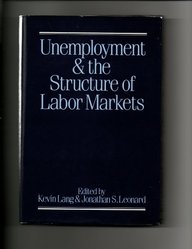
Unemployment And The Structure Of Labor Markets
Book Summary
In this book, 16 leading economists establish the connection between the forces
of the labour market and the persistent but ever-changing problem of
unemployment. These scholars examine structural unemployment in terms of
efficiency wage and dual labour market models, as well as neo-classical theory.
The effects of the decline of the manufacturing sector, the rise in services,
and the upheaval in the oil industry on our understanding of cyclical and
frictional unemployment are incorporated into the analysis. An examination of
the relationship between structural shifts and unemployment considers the
frequency and duration of unemployment of displaced workers, the effects of
migration caused by structural shifts, and the phenomenon
Book Specifications
- ISBN-13
- 9780631153788
- Language
- English
- Binding
- Hard Bound
- Publisher
- Blackwell Publishing
- Publishing Date
- 1987
- Total Pages
- 253