
MRP: ₹4460
₹3532
₹ 928 Off
(Incl. of all taxes)
Qty
Buying in bulk?
In stock
Deliver to
- 7-day returns
- Secure payment
- International shipping
- Carefully packed
Get this at ₹ 3355Extra 5% OffAdd items worth ₹999 to the cart & get extra 5% off
Get this at ₹ 3179Extra 10% OffAdd items worth ₹1499 to the cart & get extra 10% off
Book Summary
English lyric poetry from Wyatt to Donne falls into three consecutive stylistic
phases. Tottel's Miscellany presided over the first, making the lyrics of Wyatt
and Surrey available for imitation by mid-century poets like Barnabe Googe,
George Turberville, and George Gascoigne. The Shepheardes Calender and Sidney's
Defense of Poesy ushered in the second, the Elizabethan or "Golden" phase of the
1580s and 1590s. In the third phase Donne and Jonson, reacting against the
stylistic orientation of the Elizabethan poets, reconceived the status of
"poesy" and resituated the lyric for a post-Elizabethan audience.
Chapter 7 is shared between Donne and Jonson, post-Elizabethan writers who used
metonymy to subvert the metaphoric
- ISBN-13
- 9780271006239
- Language
- English
- Binding
- Hard Bound
- Publisher
- Penn State University Press
- Publishing Date
- 1988-07
- Product Edition
- 1ST
- Total Pages
- 199
Power In Verse: Metaphor And Metonymy In The Renaissance Lyric
by Jane Hedley (Author),
Penn State University Press (Publisher)
fictionfantasyyoung adultaward winning
Frequently bought together
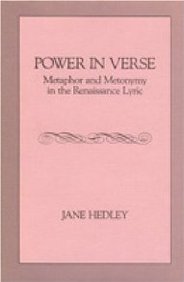 Power In Verse: Metaphor And Metonymy In The Renaissance Lyric₹3532This item
 Maarikaadu₹63
 Natyamayuri₹63
Total for 3 items₹3658₹4600You save ₹942
Product Specifications
Book Summary
English lyric poetry from Wyatt to Donne falls into three consecutive stylistic
phases. Tottel's Miscellany presided over the first, making the lyrics of Wyatt
and Surrey available for imitation by mid-century poets like Barnabe Googe,
George Turberville, and George Gascoigne. The Shepheardes Calender and Sidney's
Defense of Poesy ushered in the second, the Elizabethan or "Golden" phase of the
1580s and 1590s. In the third phase Donne and Jonson, reacting against the
stylistic orientation of the Elizabethan poets, reconceived the status of
"poesy" and resituated the lyric for a post-Elizabethan audience.
Chapter 7 is shared between Donne and Jonson, post-Elizabethan writers who used
metonymy to subvert the metaphoric
Book Specifications
- ISBN-13
- 9780271006239
- Language
- English
- Binding
- Hard Bound
- Publisher
- Penn State University Press
- Publishing Date
- 1988-07
- Product Edition
- 1ST
- Total Pages
- 199