
₹1885
₹2324
(19% Off)
Inclusive of all taxes
Qty
Buying in bulk?

In Stock

Guaranteed Service

Free Home Delivery
above ₹199
Check Delivery
Enter pincode for exact delivery dates / charges and to know if express delivery is available
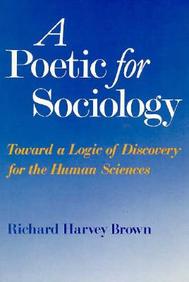
A Poetic For Sociology: Toward A Logic Of Discovery For The Human Sciences
by Richard Harvey Brown (Author),
University Of Chicago Press (Publisher)
Product Specifications
Book Description
For too long, argues Richard Harvey Brown, social scientists have felt forced to
choose between imitating science's empirical methodology and impersonating a
romantic notion of art, the methods of which are seen as primarily a matter of
intuition, interpretation, and opinion. Developing the idea of a "cognitive
aesthetic," Brown shows how both science and art--as well as the human studies
that stand between them--depend on metaphoric thinking as their "logic of
discovery" and may be assessed in terms of such aesthetic criteria of adequacy
as economy, elegance, originality, scope, congruence, and form.
By recognizing this "aesthetic" common ground between science and art, Brown
demonstrates that a fusion
Book Specifications
ISBN-13 9780226076195
Language English
Binding Paper Back
Publisher University Of Chicago Press
Publishing Date 1989-03-07
Total Pages 318