
MRP: ₹17449
₹14276
₹ 3173 Off
(Incl. of all taxes)
Qty
Buying in bulk?
In stock
Deliver to
- 7-day returns
- Secure payment
- International shipping
- Carefully packed
Get this at ₹ 13562Extra 5% OffAdd items worth ₹999 to the cart & get extra 5% off
Get this at ₹ 12848Extra 10% OffAdd items worth ₹1499 to the cart & get extra 10% off
Book Summary
Nuclear receptors (NR) are ligand-induced activated transcription factors that
are involved in numerous biological processes. Since the 1990's when the first
structures were determined by means of X ray diffraction, the number of NR
structures has increased considerably. Moreover several "omics" projects
(genomics, pharmcogenomics and proteomics) have opened up great opportunities
for the discovery of new targets, the characterization of abnormal protein
patterns, the selection of "tailored" drugs and the evaluation of drug efficacy
even with a lack of structural data. Furthermore, structure-based drug design,
computational methods for in silico screening and nanobiotechnology- based tools
are simplifying this time-consuming and money-intensive research of lead
compounds and, possibly, new drugs.
- ISBN-13
- 9781849733649
- Language
- English
- Binding
- Hard Bound
- Publisher
- Royal Society of Chemistry
- Publishing Date
- 2012-11-02
- Total Pages
- 300
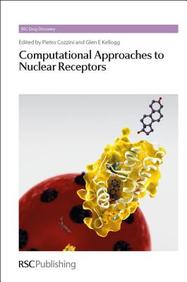
Nuclear Receptors: From Computational Simulation to in Vivo Experiments (RSC Drug Discovery)
by Ana Martinez, David E. Thurston, David Fox, David P. Rotella, Glen E. Kellogg, Laura Narciso, Pietro Cozzini, Robin Ganellin, Salvatore Guccione, Stefano Lorenzetti (Author),
Royal Society of Chemistry (Publisher)
fictionfantasyyoung adultaward winning
Frequently bought together
 Nuclear Receptors: From Computational Simulation to in Vivo Experiments (RSC Drug Discovery)₹14276This item
 Maarikaadu₹63
 Natyamayuri₹63
Total for 3 items₹14402₹17589You save ₹3187
Product Specifications
Book Summary
Nuclear receptors (NR) are ligand-induced activated transcription factors that
are involved in numerous biological processes. Since the 1990's when the first
structures were determined by means of X ray diffraction, the number of NR
structures has increased considerably. Moreover several "omics" projects
(genomics, pharmcogenomics and proteomics) have opened up great opportunities
for the discovery of new targets, the characterization of abnormal protein
patterns, the selection of "tailored" drugs and the evaluation of drug efficacy
even with a lack of structural data. Furthermore, structure-based drug design,
computational methods for in silico screening and nanobiotechnology- based tools
are simplifying this time-consuming and money-intensive research of lead
compounds and, possibly, new drugs.
Book Specifications
- ISBN-13
- 9781849733649
- Language
- English
- Binding
- Hard Bound
- Publisher
- Royal Society of Chemistry
- Publishing Date
- 2012-11-02
- Total Pages
- 300