
MRP: ₹15769
₹12930
₹ 2839 Off
(Incl. of all taxes)
Qty
Buying in bulk?
In stock
Deliver to
- 7-day returns
- Secure payment
- International shipping
- Carefully packed
Get this at ₹ 12284Extra 5% OffAdd items worth ₹999 to the cart & get extra 5% off
Get this at ₹ 11637Extra 10% OffAdd items worth ₹1499 to the cart & get extra 10% off
Book Summary
FROM THE PUBLISHER
Since Alois Alzheimer described the results of his postmortem studies in 1906,
significant strides have been made in understanding the pathogenesis of
neurodegenerative diseases. Substantial evidence has accumulated indicating that
diverse neurodegenerative disorders might share a common pathological mechanism:
the misfolding, aggregation and accumulation of proteins (termed "amyloid") in
the brain. Metal ions have long been thought to catalyze protein misfolding
initiating a cascade of events resulting in oxidative damage and
neurodegeneration. They have, consequently, been seen as a suitable
pharmacological target. However, drugs aimed at simply removing excess metals or
interfering in amyloid deposition were unsuccessful and scientists have been
forced to review the classical hypothesis.
- ISBN-13
- 9781849730501
- Language
- English
- Binding
- Hard Bound
- Publisher
- Royal Society of Chemistry
- Publishing Date
- 2011-07-04
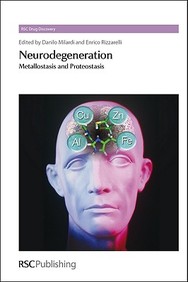
Neurodegeneration: Metallostasis And Proteostasis
by Danilo Milardi (Author),
Royal Society of Chemistry (Publisher)
fictionfantasyyoung adultaward winning
Frequently bought together


Total for 3 items₹13056₹15909You save ₹2853
Product Specifications
Book Summary
FROM THE PUBLISHER
Since Alois Alzheimer described the results of his postmortem studies in 1906,
significant strides have been made in understanding the pathogenesis of
neurodegenerative diseases. Substantial evidence has accumulated indicating that
diverse neurodegenerative disorders might share a common pathological mechanism:
the misfolding, aggregation and accumulation of proteins (termed "amyloid") in
the brain. Metal ions have long been thought to catalyze protein misfolding
initiating a cascade of events resulting in oxidative damage and
neurodegeneration. They have, consequently, been seen as a suitable
pharmacological target. However, drugs aimed at simply removing excess metals or
interfering in amyloid deposition were unsuccessful and scientists have been
forced to review the classical hypothesis.
Book Specifications
- ISBN-13
- 9781849730501
- Language
- English
- Binding
- Hard Bound
- Publisher
- Royal Society of Chemistry
- Publishing Date
- 2011-07-04