
MRP: ₹5817
₹4952
₹ 865 Off
(Incl. of all taxes)
Qty
Buying in bulk?
In stock
Deliver to
- 7-day returns
- Secure payment
- International shipping
- Carefully packed
Get this at ₹ 4704Extra 5% OffAdd items worth ₹999 to the cart & get extra 5% off
Get this at ₹ 4457Extra 10% OffAdd items worth ₹1499 to the cart & get extra 10% off
Book Summary
Having unilaterally opened its borders to international competition and foreign
investment in the mid-1980s, Mexico has become one of the world's leading
proponents of economic liberalization. Nevertheless, as the recent uprising of
native peoples in Chiapas has made clear, economic reforms are not universally
welcomed.This book addresses the challenges brought about by the restructuring
of the Mexican economy at a time when multiple organizations of civil society
are demanding a democratic political transition in a system that has been
dominated by one party for nearly seventy years. The contributors identify the
key social and political actors--both domestic and international--involved in
promoting or resisting the new economic model and
- ISBN-13
- 9780813324418
- Language
- English
- Binding
- Paper Back
- Publisher
- Westview Press
- Publishing Date
- 1996-06-03
- Total Pages
- 288
Neoliberalism Revisited: Economic Restructuring And Mexico's Political Future
Frequently bought together
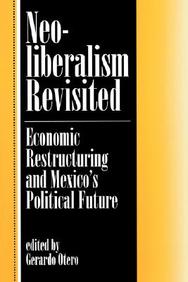 Neoliberalism Revisited: Economic Restructuring And Mexico's Political Future₹4952This item
 Maarikaadu₹63
 Natyamayuri₹63
Total for 3 items₹5078₹5957You save ₹879
Product Specifications
Book Summary
Having unilaterally opened its borders to international competition and foreign
investment in the mid-1980s, Mexico has become one of the world's leading
proponents of economic liberalization. Nevertheless, as the recent uprising of
native peoples in Chiapas has made clear, economic reforms are not universally
welcomed.This book addresses the challenges brought about by the restructuring
of the Mexican economy at a time when multiple organizations of civil society
are demanding a democratic political transition in a system that has been
dominated by one party for nearly seventy years. The contributors identify the
key social and political actors--both domestic and international--involved in
promoting or resisting the new economic model and
Book Specifications
- ISBN-13
- 9780813324418
- Language
- English
- Binding
- Paper Back
- Publisher
- Westview Press
- Publishing Date
- 1996-06-03
- Total Pages
- 288