
MRP: ₹695
₹632
₹ 63 Off
(Incl. of all taxes)
Qty
Buying in bulk?
In stock
Deliver to
- 7-day returns
- Secure payment
- International shipping
- Carefully packed
Get this at ₹ 600Extra 5% OffAdd items worth ₹999 to the cart & get extra 5% off
Get this at ₹ 569Extra 10% OffAdd items worth ₹1499 to the cart & get extra 10% off
Book Summary
British rule of India brought together two very different traditions of
scholarship about language, whose conjuncture led to several intellectual
breakthroughs of lasting value. Two of these were especially important: the
conceptualization of the Indo-European language family by Sir William Jones at
Calcutta in 1786--proposing that Sanskrit is related to Persian and languages of
Europe--and the conceptualization of the Dravidian language family of South
India by F.W. Ellis at Madras in 1816--the "Dravidian proof," showing that the
languages of South India are related to one another but are not derived from
Sanskrit. These concepts are valid still today, centuries later. This book
continues the examination Thomas R. Trautmann
- ISBN-13
- 9788190363402
- Language
- English
- Binding
- Hard Bound
- Publisher
- Foundation Books Pvt. Ltd
- Publishing Date
- 2006
- Product Edition
- 1
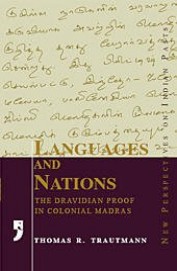
Languages & Nations
by Thomas R Trautmann (Author),
Foundation Books Pvt. Ltd (Publisher)
fictionfantasyyoung adultaward winning
Frequently bought together


Total for 3 items₹758₹835You save ₹77
Product Specifications
Book Summary
British rule of India brought together two very different traditions of
scholarship about language, whose conjuncture led to several intellectual
breakthroughs of lasting value. Two of these were especially important: the
conceptualization of the Indo-European language family by Sir William Jones at
Calcutta in 1786--proposing that Sanskrit is related to Persian and languages of
Europe--and the conceptualization of the Dravidian language family of South
India by F.W. Ellis at Madras in 1816--the "Dravidian proof," showing that the
languages of South India are related to one another but are not derived from
Sanskrit. These concepts are valid still today, centuries later. This book
continues the examination Thomas R. Trautmann
Book Specifications
- ISBN-13
- 9788190363402
- Language
- English
- Binding
- Hard Bound
- Publisher
- Foundation Books Pvt. Ltd
- Publishing Date
- 2006
- Product Edition
- 1