
MRP: ₹1810
₹1442
₹ 368 Off
(Incl. of all taxes)
Qty
Buying in bulk?
In stock
Deliver to
- 7-day returns
- Secure payment
- International shipping
- Carefully packed
Get this at ₹ 1370Extra 5% OffAdd items worth ₹999 to the cart & get extra 5% off
Get this at ₹ 1298Extra 10% OffAdd items worth ₹1499 to the cart & get extra 10% off
Book Summary
This book aims to enable parents in trilingual families to consider possible
language strategies on the basis of analysing their individual circumstances. It
includes a tool for diagnostic self-analysis that will help each reader to
identify their situation and learn how parents in similar situations have
approached the task of supporting their children's use of languages. Based on a
unique survey of parents in trilingual families in two European countries, the
book highlights the challenges that trilingual families face when living in
mainly monolingual societies. It takes into account the recent emergence of a
"New Trilingualism" among educated parents who find themselves in trilingual
families because of global
- ISBN-13
- 9781783091140
- Language
- English
- Binding
- Paper Back
- Publisher
- Multilingual Matters
- Publishing Date
- 2014-02-03
- Total Pages
- 128
Language Strategies for Trilingual Families: Parents' Perspectives (Parents' and Teachers' Guides)
by Andreas Braun, Tony Cline (Author),
Multilingual Matters (Publisher)
fictionfantasyyoung adultaward winning
Frequently bought together
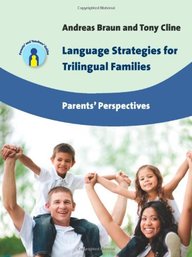 Language Strategies for Trilingual Families: Parents' Perspectives (Parents' and Teachers' Guides)₹1442This item
 Maarikaadu₹63
 Natyamayuri₹63
Total for 3 items₹1568₹1950You save ₹382
Product Specifications
Book Summary
This book aims to enable parents in trilingual families to consider possible
language strategies on the basis of analysing their individual circumstances. It
includes a tool for diagnostic self-analysis that will help each reader to
identify their situation and learn how parents in similar situations have
approached the task of supporting their children's use of languages. Based on a
unique survey of parents in trilingual families in two European countries, the
book highlights the challenges that trilingual families face when living in
mainly monolingual societies. It takes into account the recent emergence of a
"New Trilingualism" among educated parents who find themselves in trilingual
families because of global
Book Specifications
- ISBN-13
- 9781783091140
- Language
- English
- Binding
- Paper Back
- Publisher
- Multilingual Matters
- Publishing Date
- 2014-02-03
- Total Pages
- 128