
₹895
₹1050
(15% Off)
Inclusive of all taxes
Qty
Buying in bulk?

In Stock

Guaranteed Service

Free Home Delivery
above ₹199
Check Delivery
Enter pincode for exact delivery dates / charges and to know if express delivery is available
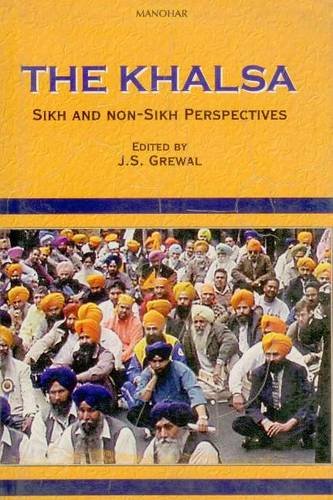
Khalsa: Sikhs and Non-Sikh Perspectives
by J.S. Grewal (Author),
Manohar (Publisher)
Product Specifications
Book Description
This book demonstrates that historiography is a dynamic process.The five major
Sikh writers analysed in the book presentdifferences of factual detail,
objectives and approach. If oneglorifies the Khalsa as upholding the
monotheistic tradition,another compromises the monotheistic tradition by
bringing in thegoddess. If one negates the egalitarian norm of the Khalsa
socialorder, another valorizes its uncompromising sovereignty in the faceof
threat from the British. Modern historians present no lessdivergent views. If
one looks upon the Khalsa as the emergence of anew nation, another minimizes
their achievement in comparison withthe British. If one tries to reconcile
doctrinal sovereignty withpolitical loyalty, another presents the Khalsa as
serving the causeof Hindu nationalism. Still
Book Specifications
ISBN-13 9788173045806
Language English
Binding Hard Bound
Publisher Manohar
Publishing Date 2004-01
Total Pages 220