
₹2695
₹3195
(16% Off)
Inclusive of all taxes
Qty
Buying in bulk?

In Stock

Guaranteed Service

Free Home Delivery
above ₹199
Check Delivery
Enter pincode for exact delivery dates / charges and to know if express delivery is available
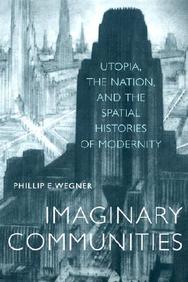
Imaginary Communities: Utopia, The Nation, And The Spatial Histories Of Modernity
by Phillip E. Wegner (Author),
University of California Press (Publisher)
Product Specifications
Book Description
Drawing from literary history, social theory, and political critique, this
far-reaching study explores the utopian narrative as a medium for understanding
the social space of the modern nation-state. Considering the narrative utopia
from its earliest manifestation in Thomas More's sixteenth-century work "Utopia
"to some of the most influential utopias of the late nineteenth and twentieth
centuries, this book is an astute study of a literary genre as well as a nuanced
dialectical meditation on the history of utopian thinking as a quintessential
history of modernity.
As he unravels the dialectics at work in the utopian narrative, Wegner gives an
ambitious synthetic discussion of theories of modernity, considering
Book Specifications
ISBN-13 9780520228290
Language English
Binding Paper Back
Publisher University of California Press
Publishing Date 2002-06-04
Total Pages 323