
MRP: ₹2424
₹2094
₹ 330 Off
(Incl. of all taxes)
Qty
Buying in bulk?
In stock
Deliver to
- 7-day returns
- Secure payment
- International shipping
- Carefully packed
Get this at ₹ 1989Extra 5% OffAdd items worth ₹999 to the cart & get extra 5% off
Get this at ₹ 1885Extra 10% OffAdd items worth ₹1499 to the cart & get extra 10% off
Book Summary
For about three thousand years comedy has applied a welcome humanist perspective
to the world's religious beliefs and practices. From the ancient Greek comedies
of Aristophanes, the famous poem by Lucretius, and dialogues of Cicero to early
modern and Enlightenment essays and philosophical texts, together with the
inherent skepticism about life after death in tragicomedies by Plautus,
Shakespeare, Molière, and nineteenth-century novels by such as Dickens and Hugo,
the literary critic and historian Alexander Welsh analyzes the prevalence of
openness of mind and relieving good humor in Western thought.The Humanist Comedy
concludes with close examination of a postmodern novel by the Nobel Prize winner
José Saramago.
- ISBN-13
- 9780300197518
- Language
- English
- Binding
- Paper Back
- Publisher
- Yale University Press
- Publishing Date
- 2014-05-27
- Total Pages
- 280
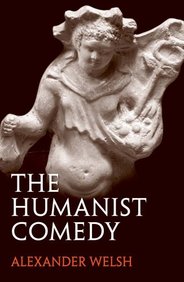
The Humanist Comedy
by Alexander Welsh (Author),
Yale University Press (Publisher)
fictionfantasyyoung adultaward winning
Frequently bought together
Total for 3 items₹2220₹2564You save ₹344
Product Specifications
Book Summary
For about three thousand years comedy has applied a welcome humanist perspective
to the world's religious beliefs and practices. From the ancient Greek comedies
of Aristophanes, the famous poem by Lucretius, and dialogues of Cicero to early
modern and Enlightenment essays and philosophical texts, together with the
inherent skepticism about life after death in tragicomedies by Plautus,
Shakespeare, Molière, and nineteenth-century novels by such as Dickens and Hugo,
the literary critic and historian Alexander Welsh analyzes the prevalence of
openness of mind and relieving good humor in Western thought.The Humanist Comedy
concludes with close examination of a postmodern novel by the Nobel Prize winner
José Saramago.
Book Specifications
- ISBN-13
- 9780300197518
- Language
- English
- Binding
- Paper Back
- Publisher
- Yale University Press
- Publishing Date
- 2014-05-27
- Total Pages
- 280