
MRP: ₹21814
₹17776
₹ 4038 Off
(Incl. of all taxes)
Qty
Buying in bulk?
In stock
Deliver to
- 7-day returns
- Secure payment
- International shipping
- Carefully packed
Get this at ₹ 16887Extra 5% OffAdd items worth ₹999 to the cart & get extra 5% off
Get this at ₹ 15998Extra 10% OffAdd items worth ₹1499 to the cart & get extra 10% off
Book Summary
Urologists have long used urinary stents in patients who have - or who are at
risk of developing - an obstruction or blockage of the kidney. These rodlike
devices are inserted into the ureter to keep the canal open or to help with
healing after trauma, surgery or radiotherapy. More recently the use of stents
for the prostate and urethra has also become more widespread, despite poor
results in first generation models. Constant development has led to the
introduction of second generation stents with a variety of designs, materials
and coatings. These have gone a long way to counter the traditional side effects
such as irritation, hematuria,
- ISBN-13
- 9781907816659
- Language
- English
- Binding
- Hard Bound
- Publisher
- Jp Medical Ltd
- Publishing Date
- 2017-04-01
- Total Pages
- 345
Handbook of Urinary Stents: Basic Science and Clinical Applications
by Noor, M.D. Buchholz, Oliver, M.D., Ph.D. Hakenberg, Juniad Massod, Christian, M.D. Bach (Author),
Jp Medical Ltd (Publisher)
fictionfantasyyoung adultaward winning
Frequently bought together
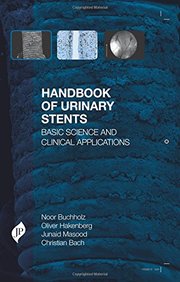 Handbook of Urinary Stents: Basic Science and Clinical Applications₹17776This item
 Maarikaadu₹63
 Natyamayuri₹63
Total for 3 items₹17902₹21954You save ₹4052
Product Specifications
Book Summary
Urologists have long used urinary stents in patients who have - or who are at
risk of developing - an obstruction or blockage of the kidney. These rodlike
devices are inserted into the ureter to keep the canal open or to help with
healing after trauma, surgery or radiotherapy. More recently the use of stents
for the prostate and urethra has also become more widespread, despite poor
results in first generation models. Constant development has led to the
introduction of second generation stents with a variety of designs, materials
and coatings. These have gone a long way to counter the traditional side effects
such as irritation, hematuria,
Book Specifications
- ISBN-13
- 9781907816659
- Language
- English
- Binding
- Hard Bound
- Publisher
- Jp Medical Ltd
- Publishing Date
- 2017-04-01
- Total Pages
- 345