
MRP: ₹21973
₹17903
₹ 4070 Off
(Incl. of all taxes)
Qty
Buying in bulk?
In stock
Deliver to
- 7-day returns
- Secure payment
- International shipping
- Carefully packed
Get this at ₹ 17008Extra 5% OffAdd items worth ₹999 to the cart & get extra 5% off
Get this at ₹ 16113Extra 10% OffAdd items worth ₹1499 to the cart & get extra 10% off
Book Summary
G protein-coupled receptors (GPCRs) are the largest family of cell-surface
receptors, with more than 800 members identified thus far in the human genome.
They regulate the function of most cells in the body, and represent
approximately 3% of the genes in the human genome. These receptors respond to a
wide variety of structurally diverse ligands, ranging from small molecules, such
as biogenic amines, nucleotides and ions, to lipids, peptides, proteins, and
even light. Ligands (agonists and antagonists) acting on GPCRs are important in
the treatment of numerous diseases, including cardiovascular and mental
disorders, retinal degeneration, cancer, and AIDS. It is estimated that these
receptors represent about one third
- ISBN-13
- 9781849731836
- Language
- English
- Binding
- Hard Bound
- Publisher
- Royal Society of Chemistry
- Publishing Date
- 2011-08-30
G Protein-Coupled Receptors: From Structure To Function (Rsc Drug Discovery)
Frequently bought together
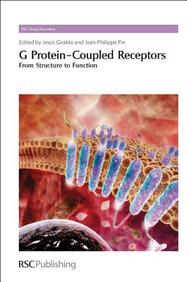 G Protein-Coupled Receptors: From Structure To Function (Rsc Drug Discovery)₹17903This item
 Maarikaadu₹63
 Natyamayuri₹63
Total for 3 items₹18029₹22113You save ₹4084
Product Specifications
Book Summary
G protein-coupled receptors (GPCRs) are the largest family of cell-surface
receptors, with more than 800 members identified thus far in the human genome.
They regulate the function of most cells in the body, and represent
approximately 3% of the genes in the human genome. These receptors respond to a
wide variety of structurally diverse ligands, ranging from small molecules, such
as biogenic amines, nucleotides and ions, to lipids, peptides, proteins, and
even light. Ligands (agonists and antagonists) acting on GPCRs are important in
the treatment of numerous diseases, including cardiovascular and mental
disorders, retinal degeneration, cancer, and AIDS. It is estimated that these
receptors represent about one third
Book Specifications
- ISBN-13
- 9781849731836
- Language
- English
- Binding
- Hard Bound
- Publisher
- Royal Society of Chemistry
- Publishing Date
- 2011-08-30