
MRP: ₹2353
₹1959
₹ 394 Off
(Incl. of all taxes)
In stock
Deliver to
Enter your pincode to see dispatch dates
Free delivery above ₹199
Qty
- Secure payment
- International shipping
- Carefully packed
Book Summary
Freedom of speech is a central tenet of the American way of life that is tested
and fought over seemingly every day. Curiously, people who follow and study free
speech issues assume that controversies and litigation about free speech began
abruptly during World War I. The surprising research in this original book
reveals that this conventional view is incorrect, and that the previously
unknown history of free speech between the Civil War and World War I is rich and
varied. For instance, the author shows that important free speech controversies,
often involving the activities of sex reformers and labor unions, preceded the
Espionage Act of 1917. A
- ISBN-13
- 9780521655378
- Language
- English
- Binding
- Paper Back
- Publisher
- Cambridge University Press
- Publishing Date
- 2000-02-17
- Product Edition
- New Ed
- Total Pages
- 420
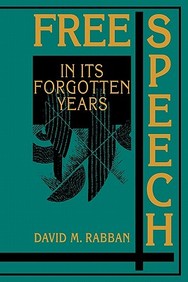
Free Speech In Its Forgotten Years, 1870-1920
Book Summary
Freedom of speech is a central tenet of the American way of life that is tested
and fought over seemingly every day. Curiously, people who follow and study free
speech issues assume that controversies and litigation about free speech began
abruptly during World War I. The surprising research in this original book
reveals that this conventional view is incorrect, and that the previously
unknown history of free speech between the Civil War and World War I is rich and
varied. For instance, the author shows that important free speech controversies,
often involving the activities of sex reformers and labor unions, preceded the
Espionage Act of 1917. A
Book Specifications
- ISBN-13
- 9780521655378
- Language
- English
- Binding
- Paper Back
- Publisher
- Cambridge University Press
- Publishing Date
- 2000-02-17
- Product Edition
- New Ed
- Total Pages
- 420