
MRP: ₹10568
₹8760
₹ 1808 Off
(Incl. of all taxes)
Qty
Buying in bulk?
In stock
Deliver to
- 7-day returns
- Secure payment
- International shipping
- Carefully packed
Get this at ₹ 8322Extra 5% OffAdd items worth ₹999 to the cart & get extra 5% off
Get this at ₹ 7884Extra 10% OffAdd items worth ₹1499 to the cart & get extra 10% off
Book Summary
In the mid-1930s Herbert W. Armstrong, an unsuccessful American advertising
executive, founded a millennialist Sabbatarian Christian sect with a heterodox
theology. Over the next half century, despite a number of setbacks, scandals,
criticisms, and attacks from former members and anti-cultists, Armstrong's
organization, the Worldwide Church of God, grew to around 100,000 baptized
members with a world circulation of over six million for its flagship monthly
magazine Plain Truth. In January 1986, Armstrong died. His successor changed
most of the church's distinctive doctrines, leading it towards an increasing
convergence with mainstream Evangelical Christianity. This created a massive
cognitive dissonance in ministers and members: should they accept or reject the
authority
- ISBN-13
- 9780199861514
- Language
- English
- Binding
- Hard Bound
- Publisher
- Oxford University Press
- Publishing Date
- 2013-01-02
- Total Pages
- 352
The Fragmentation of a Sect: Schism in the Worldwide Church of God
by David V. Barrett (Author),
Oxford University Press (Publisher)
fictionfantasyyoung adultaward winning
Frequently bought together
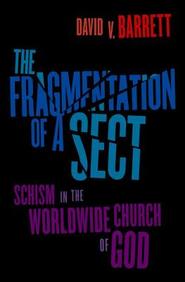 The Fragmentation of a Sect: Schism in the Worldwide Church of God₹8760This item
 Maarikaadu₹63
 Natyamayuri₹63
Total for 3 items₹8886₹10708You save ₹1822
Product Specifications
Book Summary
In the mid-1930s Herbert W. Armstrong, an unsuccessful American advertising
executive, founded a millennialist Sabbatarian Christian sect with a heterodox
theology. Over the next half century, despite a number of setbacks, scandals,
criticisms, and attacks from former members and anti-cultists, Armstrong's
organization, the Worldwide Church of God, grew to around 100,000 baptized
members with a world circulation of over six million for its flagship monthly
magazine Plain Truth. In January 1986, Armstrong died. His successor changed
most of the church's distinctive doctrines, leading it towards an increasing
convergence with mainstream Evangelical Christianity. This created a massive
cognitive dissonance in ministers and members: should they accept or reject the
authority
Book Specifications
- ISBN-13
- 9780199861514
- Language
- English
- Binding
- Hard Bound
- Publisher
- Oxford University Press
- Publishing Date
- 2013-01-02
- Total Pages
- 352