
MRP: ₹16157
₹12316
₹ 3841 Off
(Incl. of all taxes)
Qty
Buying in bulk?
In stock
Deliver to
- 7-day returns
- Secure payment
- International shipping
- Carefully packed
Get this at ₹ 11700Extra 5% OffAdd items worth ₹999 to the cart & get extra 5% off
Get this at ₹ 11084Extra 10% OffAdd items worth ₹1499 to the cart & get extra 10% off
Book Summary
Billions of dollars are being spent nationally and globally on providing
computing access to digitally disadvantaged groups and cultures with an
expectation that computers and the Internet can lead to higher socio-economic
mobility. This ethnographic study of social computing in the Central Himalayas,
India, investigates alternative social practices with new technologies and media
amongst a population that is for the most part undocumented. In doing so, this
book offers fresh and critical perspectives on issues of contemporary debate:
free learning with computers, relevant and global information, the range and
role of actors as intermediaries of digital information, impact of direct versus
indirect access on social computing, gender and
- ISBN-13
- 9781409401070
- Language
- English
- Binding
- Hard Bound
- Publisher
- Ashgate Publishing Company
- Publishing Date
- 2010-09-28
- Product Edition
- 1
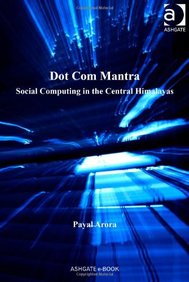
Dot Com Mantra
by Payal Arora (Author),
Ashgate Publishing Company (Publisher)
fictionfantasyyoung adultaward winning
Frequently bought together


Total for 3 items₹12442₹16297You save ₹3855
Product Specifications
Book Summary
Billions of dollars are being spent nationally and globally on providing
computing access to digitally disadvantaged groups and cultures with an
expectation that computers and the Internet can lead to higher socio-economic
mobility. This ethnographic study of social computing in the Central Himalayas,
India, investigates alternative social practices with new technologies and media
amongst a population that is for the most part undocumented. In doing so, this
book offers fresh and critical perspectives on issues of contemporary debate:
free learning with computers, relevant and global information, the range and
role of actors as intermediaries of digital information, impact of direct versus
indirect access on social computing, gender and
Book Specifications
- ISBN-13
- 9781409401070
- Language
- English
- Binding
- Hard Bound
- Publisher
- Ashgate Publishing Company
- Publishing Date
- 2010-09-28
- Product Edition
- 1