
MRP: ₹2812
₹2083
₹ 729 Off
(Incl. of all taxes)
Qty
Buying in bulk?
In stock Only 2 left
Deliver to
- 7-day returns
- Secure payment
- International shipping
- Carefully packed
Get this at ₹ 1979Extra 5% OffAdd items worth ₹999 to the cart & get extra 5% off
Get this at ₹ 1875Extra 10% OffAdd items worth ₹1499 to the cart & get extra 10% off
Book Summary
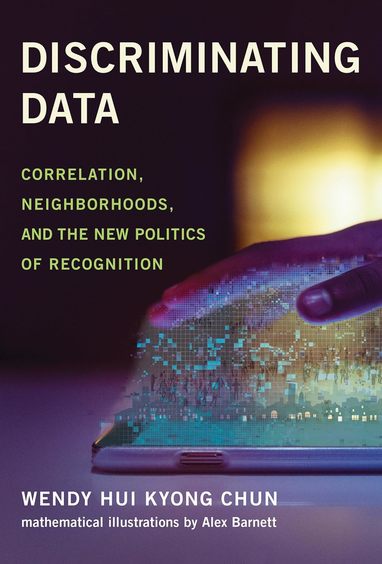
About the Book: Discriminating Data: Correlation, Neighborhoods, and the New
Politics of Recognition
How big data and machine learning encode discrimination and create agitated
clusters of comforting rage.
In Discriminating Data, Wendy Hui Kyong Chun reveals how polarization is a
goal—not an error—within big data and machine learning. These methods, she
argues, encode segregation, eugenics, and identity politics through their
default assumptions and conditions. Correlation, which grounds big datas
predictive potential, stems from twentieth-century eugenic attempts to "breed" a
better future. Recommender systems foster angry clusters of sameness through
homophily. Users are "trained" to become authentically predictable via a
politics and technology of recognition. Machine learning and
- ISBN-13
- 9780262046220
- Language
- English
- Binding
- Hard Bound
- Publisher
- Mit Press
- Publishing Date
- 2024-03-05
- Total Pages
- 344
Discriminating Data: Correlation, Neighborhoods, and the New Politics of Recognition
by Wendy Hui Kyong Chun, Alex Barnett (Author),
Mit Press (Publisher)
fictionfantasyyoung adultaward winning
Frequently bought together
 Discriminating Data: Correlation, Neighborhoods, and the New Politics of Recognition₹2083This item
 Maarikaadu₹63
 Natyamayuri₹63
Total for 3 items₹2209₹2952You save ₹743
Product Specifications
Book Summary
About the Book: Discriminating Data: Correlation, Neighborhoods, and the New
Politics of Recognition
How big data and machine learning encode discrimination and create agitated
clusters of comforting rage.
In Discriminating Data, Wendy Hui Kyong Chun reveals how polarization is a
goal—not an error—within big data and machine learning. These methods, she
argues, encode segregation, eugenics, and identity politics through their
default assumptions and conditions. Correlation, which grounds big datas
predictive potential, stems from twentieth-century eugenic attempts to "breed" a
better future. Recommender systems foster angry clusters of sameness through
homophily. Users are "trained" to become authentically predictable via a
politics and technology of recognition. Machine learning and
Book Specifications
- ISBN-13
- 9780262046220
- Language
- English
- Binding
- Hard Bound
- Publisher
- Mit Press
- Publishing Date
- 2024-03-05
- Total Pages
- 344