
MRP: ₹11150
₹7951
₹ 3199 Off
(Incl. of all taxes)
Qty
Buying in bulk?
In stock Only 2 left
Deliver to
- 7-day returns
- Secure payment
- International shipping
- Carefully packed
Get this at ₹ 7553Extra 5% OffAdd items worth ₹999 to the cart & get extra 5% off
Get this at ₹ 7156Extra 10% OffAdd items worth ₹1499 to the cart & get extra 10% off
Book Summary
In today's knowledge-driven economy, the ability to share insight and know-how
is essential for driving innovation and growth. In this groundbreaking volume,
scholars from around the world demonstrate how communication and information
technologies are enabling dynamic project design and management practices that
challenge traditional concepts of time, space and behavior. Showcasing
experiments in architecture, engineering, and construction design--employing
technological infrastructures that link people and their ideas across physical,
intellectual, and cultural boundaries--the authors consider such issues as the
links between competence and innovation and between individual and collective
knowledge. At the heart of their analysis is the realization that technological
innovation is chiefly a "social" activity. The implications are
- ISBN-13
- 9781567205459
- Language
- English
- Binding
- Hard Bound
- Publisher
- Praeger
- Publishing Date
- 2004-11-30
- Product Edition
- HRD
Collaborative Design And Learning: Competence Building For Innovation (International Series On Technology Policy And Innovation)
Frequently bought together
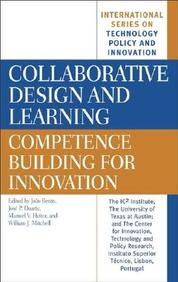 Collaborative Design And Learning: Competence Building For Innovation (International Series On Technology Policy And Innovation)₹7951This item
 Maarikaadu₹63
 Natyamayuri₹63
Total for 3 items₹8077₹11290You save ₹3213
Product Specifications
Book Summary
In today's knowledge-driven economy, the ability to share insight and know-how
is essential for driving innovation and growth. In this groundbreaking volume,
scholars from around the world demonstrate how communication and information
technologies are enabling dynamic project design and management practices that
challenge traditional concepts of time, space and behavior. Showcasing
experiments in architecture, engineering, and construction design--employing
technological infrastructures that link people and their ideas across physical,
intellectual, and cultural boundaries--the authors consider such issues as the
links between competence and innovation and between individual and collective
knowledge. At the heart of their analysis is the realization that technological
innovation is chiefly a "social" activity. The implications are
Book Specifications
- ISBN-13
- 9781567205459
- Language
- English
- Binding
- Hard Bound
- Publisher
- Praeger
- Publishing Date
- 2004-11-30
- Product Edition
- HRD