
MRP: ₹795
₹705
₹ 90 Off
(Incl. of all taxes)
Qty
Buying in bulk?
In stock
Deliver to
- 7-day returns
- Secure payment
- International shipping
- Carefully packed
Get this at ₹ 670Extra 5% OffAdd items worth ₹999 to the cart & get extra 5% off
Get this at ₹ 635Extra 10% OffAdd items worth ₹1499 to the cart & get extra 10% off
Book Summary
Thirty percent of foreign development aid is channeled through NGOs or
community-based organizations to improve service delivery to the poor, build
social capital, and establish democracy in developing nations. However, growing
evidence suggests that aid often erodes, rather than promotes, cooperation
within developing nations. This book presents a rare, micro level account of the
complex decision-making processes that bring individuals together to form
collective-action platforms. It then examines why aid often breaks down the very
institutions for collective action that it aims to promote.
"Breakdown in Pakistan" identifies concrete measures to check the erosion of
cooperation in foreign aid scenarios. Pakistan is one of the largest recipients
of
- ISBN-13
- 9789382993162
- Language
- English
- Binding
- Hard Bound
- Publisher
- Cambridge University Press India Pvt Ltd
- Publishing Date
- 2013
- Total Pages
- 240
Breakdown in Pakistan: How Aid Is Eroding Institutions for Collective Action : How Aid is Eroding Institutions for Collective Action
by Masooda Bano (Author),
Cambridge University Press India Pvt Ltd (Publisher)
fictionfantasyyoung adultaward winning
Frequently bought together
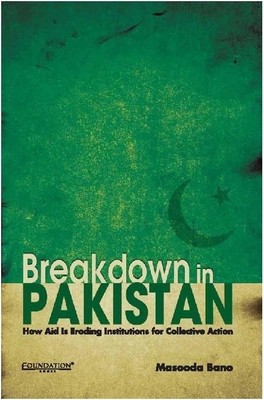 Breakdown in Pakistan: How Aid Is Eroding Institutions for Collective Action : How Aid is Eroding Institutions for Collective Action₹705This item
 Maarikaadu₹63
 Natyamayuri₹63
Total for 3 items₹831₹935You save ₹104
Product Specifications
Book Summary
Thirty percent of foreign development aid is channeled through NGOs or
community-based organizations to improve service delivery to the poor, build
social capital, and establish democracy in developing nations. However, growing
evidence suggests that aid often erodes, rather than promotes, cooperation
within developing nations. This book presents a rare, micro level account of the
complex decision-making processes that bring individuals together to form
collective-action platforms. It then examines why aid often breaks down the very
institutions for collective action that it aims to promote.
"Breakdown in Pakistan" identifies concrete measures to check the erosion of
cooperation in foreign aid scenarios. Pakistan is one of the largest recipients
of
Book Specifications
- ISBN-13
- 9789382993162
- Language
- English
- Binding
- Hard Bound
- Publisher
- Cambridge University Press India Pvt Ltd
- Publishing Date
- 2013
- Total Pages
- 240