
₹7429
₹8906
(17% Off)
Inclusive of all taxes
Qty
Buying in bulk?

In Stock

Guaranteed Service

Free Home Delivery
above ₹199
Check Delivery
Enter pincode for exact delivery dates / charges and to know if express delivery is available
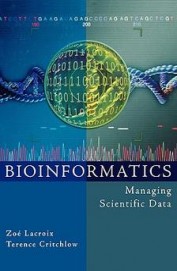
Bioinformatics Managing Scientific Data
by Zoe Lacroix, Terence Critchlow (Author),
Morgan Kaufmann Publishers Inc (Publisher)
Product Specifications
Book Description
Life science data integration and interoperability is one of the most
challenging problems facing bioinformatics today. In the current age of the life
sciences, investigators have to interpret many types of information from a
variety of sources: lab instruments, public databases, gene expression profiles,
raw sequence traces, single nucleotide polymorphisms, chemical screening data,
proteomic data, putative metabolic pathway models, and many others.
Unfortunately, scientists are not currently able to easily identify and access
this information because of the variety of semantics, interfaces, and data
formats used by the underlying data sources.
Bioinformatics: Managing Scientific Data tackles this challenge head-on by
discussing the current approaches and variety of systems
Book Specifications
ISBN-13 9781558608290
Language English
Binding Hard Bound
Publisher Morgan Kaufmann Publishers Inc
Publishing Date 2003-07-18
Product Edition 1