
MRP: ₹6011
₹5109
₹ 902 Off
(Incl. of all taxes)
Qty
Buying in bulk?
In stock
Deliver to
- 7-day returns
- Secure payment
- International shipping
- Carefully packed
Get this at ₹ 4854Extra 5% OffAdd items worth ₹999 to the cart & get extra 5% off
Get this at ₹ 4598Extra 10% OffAdd items worth ₹1499 to the cart & get extra 10% off
Book Summary
Critical studies of Turgenev have tended to focus on his realistic portrayals of
nineteenth-century Russian life and have therefore closely allied Turgenev with
the dominant literary movement of that time, Realism. By contrast, this book
reveals the non-Realist literary patterns that distinguish Turgenev's fiction.
In so doing, it newly uncovers an intricate, imaginative vision of human
experience that unites poetics and ethics.
The first part of the book identifies and assesses the ethical values associated
with Realism, finding them rooted in the virtues of the traditional rural
community. It then elucidates the very different ethical values that inform
Turgenev's art, which are rooted not in the virtues
- ISBN-13
- 9780804718738
- Language
- English
- Binding
- Hard Bound
- Publisher
- Stanford University Press
- Publishing Date
- 1992-05-01
- Total Pages
- 288
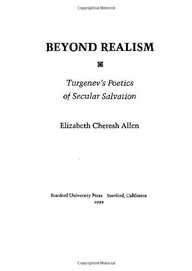
Beyond Realism: Turgenev's Poetics of Secular Salvation
by Elizabeth Allen (Author),
Stanford University Press (Publisher)
fictionfantasyyoung adultaward winning
Frequently bought together


Total for 3 items₹5235₹6151You save ₹916
Product Specifications
Book Summary
Critical studies of Turgenev have tended to focus on his realistic portrayals of
nineteenth-century Russian life and have therefore closely allied Turgenev with
the dominant literary movement of that time, Realism. By contrast, this book
reveals the non-Realist literary patterns that distinguish Turgenev's fiction.
In so doing, it newly uncovers an intricate, imaginative vision of human
experience that unites poetics and ethics.
The first part of the book identifies and assesses the ethical values associated
with Realism, finding them rooted in the virtues of the traditional rural
community. It then elucidates the very different ethical values that inform
Turgenev's art, which are rooted not in the virtues
Book Specifications
- ISBN-13
- 9780804718738
- Language
- English
- Binding
- Hard Bound
- Publisher
- Stanford University Press
- Publishing Date
- 1992-05-01
- Total Pages
- 288