
₹1295
(Incl. of all taxes)
Qty
Buying in bulk?
In stock
Deliver to
- 7-day returns
- Secure payment
- International shipping
- Carefully packed
Get this at ₹ 1230Extra 5% OffAdd items worth ₹999 to the cart & get extra 5% off
Get this at ₹ 1166Extra 10% OffAdd items worth ₹1499 to the cart & get extra 10% off
Book Summary
In this remarkable account of imperial citizenship, Sukanya Banerjee
investigates the ways that Indians formulated notions of citizenship in the
British Empire from the late nineteenth century through the early twentieth.
Tracing the affective, thematic, and imaginative tropes that underwrote Indian
claims to formal equality prior to decolonization, she emphasizes the extralegal
life of citizenship: the modes of self-representation it generates even before
it is codified and the political claims it triggers because it is deferred.
Banerjee theorizes modes of citizenship decoupled from the rights-conferring
nation-state; in so doing, she provides a new frame for understanding the
colonial subject, who is usually excluded from critical discussions of
citizenship.Interpreting autobiography,
- ISBN-13
- 9780822346081
- Language
- English
- Binding
- Paper Back
- Publisher
- Duke University Press Books
- Publishing Date
- 2010-06-17
- Total Pages
- 296
Becoming Imperial Citizens: Indians In The Late-Victorian Empire (Next Wave: New Directions In Women's Studies)
by Sukanya Banerjee (Author),
Duke University Press Books (Publisher)
fictionfantasyyoung adultaward winning
Frequently bought together
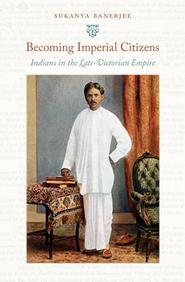 Becoming Imperial Citizens: Indians In The Late-Victorian Empire (Next Wave: New Directions In Women's Studies)₹1295This item
 Maarikaadu₹63
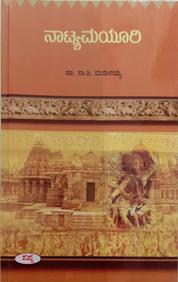 Natyamayuri₹63
Total for 3 items₹1421₹1435You save ₹14
Product Specifications
Book Summary
In this remarkable account of imperial citizenship, Sukanya Banerjee
investigates the ways that Indians formulated notions of citizenship in the
British Empire from the late nineteenth century through the early twentieth.
Tracing the affective, thematic, and imaginative tropes that underwrote Indian
claims to formal equality prior to decolonization, she emphasizes the extralegal
life of citizenship: the modes of self-representation it generates even before
it is codified and the political claims it triggers because it is deferred.
Banerjee theorizes modes of citizenship decoupled from the rights-conferring
nation-state; in so doing, she provides a new frame for understanding the
colonial subject, who is usually excluded from critical discussions of
citizenship.Interpreting autobiography,
Book Specifications
- ISBN-13
- 9780822346081
- Language
- English
- Binding
- Paper Back
- Publisher
- Duke University Press Books
- Publishing Date
- 2010-06-17
- Total Pages
- 296