
MRP: ₹20034
₹16349
₹ 3685 Off
(Incl. of all taxes)
Qty
Buying in bulk?
In stock
Deliver to
- 7-day returns
- Secure payment
- International shipping
- Carefully packed
Get this at ₹ 15532Extra 5% OffAdd items worth ₹999 to the cart & get extra 5% off
Get this at ₹ 14714Extra 10% OffAdd items worth ₹1499 to the cart & get extra 10% off
Book Summary
This is a collection of bold and visionary scholarship that reveals an
insightful exposition of re-visioning African development from African
perspectives. It provides educators, policy makers, social workers,
non-governmental agencies, and development agencies with an interdisciplinary
conceptual base that can effectively guide them in planning and implementing
programs for socio-economic development in Africa. The book provides up-to-date
scholarly research on continental trends on various subjects and concerns of
paramount importance to globalisation and development in Africa (politics,
democracy, education, gender, technology, global relationships and the role of
non-governmental organisations). The authors challenge the familiar paradigms in
order to show how imperfectly, if at all, assumptions about globalisation and
development theories
- ISBN-13
- 9781472436696
- Language
- English
- Binding
- Hard Bound
- Publisher
- Ashgate Pub Co
- Publishing Date
- 2016-03-04
- Total Pages
- 277
Africa in the Age of Globalisation: Perceptions, Misperceptions and Realities (The International Political Economy of New Regionalisms)
by Edward Shizha, Lamine Diallo (Author),
Ashgate Pub Co (Publisher)
fictionfantasyyoung adultaward winning
Frequently bought together
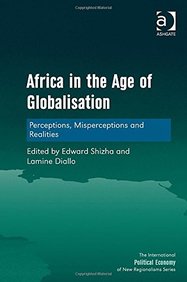 Africa in the Age of Globalisation: Perceptions, Misperceptions and Realities (The International Political Economy of New Regionalisms)₹16349This item
 Maarikaadu₹63
 Natyamayuri₹63
Total for 3 items₹16475₹20174You save ₹3699
Product Specifications
Book Summary
This is a collection of bold and visionary scholarship that reveals an
insightful exposition of re-visioning African development from African
perspectives. It provides educators, policy makers, social workers,
non-governmental agencies, and development agencies with an interdisciplinary
conceptual base that can effectively guide them in planning and implementing
programs for socio-economic development in Africa. The book provides up-to-date
scholarly research on continental trends on various subjects and concerns of
paramount importance to globalisation and development in Africa (politics,
democracy, education, gender, technology, global relationships and the role of
non-governmental organisations). The authors challenge the familiar paradigms in
order to show how imperfectly, if at all, assumptions about globalisation and
development theories
Book Specifications
- ISBN-13
- 9781472436696
- Language
- English
- Binding
- Hard Bound
- Publisher
- Ashgate Pub Co
- Publishing Date
- 2016-03-04
- Total Pages
- 277